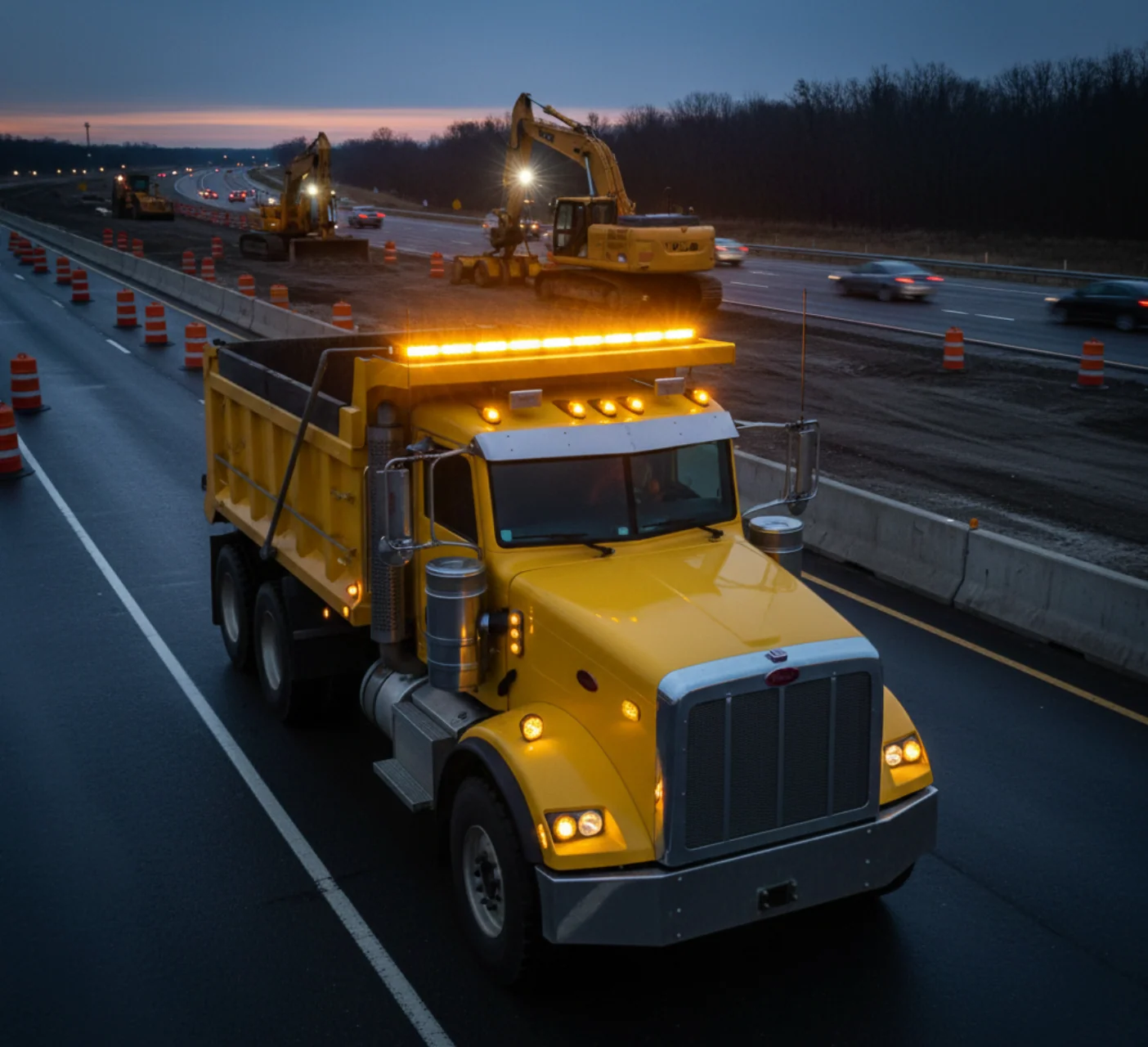
Starting January 1, 2027, Ontario drivers are legally required to slow down and move over for specified stopped work vehicles displaying flashing amber lights, extending the exact same roadside protections currently granted to emergency vehicles and tow trucks.
Under updates to the Ontario Highway Traffic Act (enacted through the Working for Workers Six Act and related provincial regulations), failing to give roadside workers a safe buffer zone carries heavy financial fines, demerit points, and potential driver's licence suspensions. Whether you are a newly licensed G2 driver or an experienced motorist, understanding these expanded rules is essential for keeping Ontario roads safe and protecting your driving record.
Why Ontario Expanded the Move Over Law for 2027
For years, Ontario’s Move Over law (Section 159 of the Highway Traffic Act) required motorists to slow down and change lanes when passing stopped police cruisers, ambulances, fire trucks, and tow trucks with flashing lights. However, municipal workers, utility crews, and sanitation operators working steps away from high-speed traffic faced daily hazards from passing vehicles.
By expanding the statutory definition of protected roadside vehicles effective January 1, 2027, Ontario aims to create a uniform standard of safety across every highway, rural road, and city street in the province.
Which Vehicles Are Protected Under the 2027 Rules?
When driving anywhere in Ontario, motorists must watch closely for flashing red, blue, or amber lights along the shoulder or in active lanes. Under the updated 2027 framework, protected vehicles fall into two primary categories:
┌────────────────────────────────────────────────────────────────────────┐
│               ONTARIO PROTECTED ROADSIDE VEHICLES (2027)               │
├──────────────────────────────┬─────────────────────────────────────────┤
│ Category                     │ Covered Vehicles                        │
├──────────────────────────────┼─────────────────────────────────────────┤
│ Emergency Vehicles & Tow     │ • Police vehicles                       │
│ Trucks                       │ • Fire trucks & ambulances              │
│                              │ • Commercial tow trucks (amber lights)  │
├──────────────────────────────┼─────────────────────────────────────────┤
│ Newly Protected Work         │ • Highway maintenance vehicles          │
│ Vehicles (Eff. Jan 1, 2027)  │ • Public utility trucks (hydro, water,  │
│                              │   natural gas, telecommunications)      │
│                              │ • Waste collection trucks (garbage,     │
│                              │   recycling, organic waste)             │
│                              │ • Roadside assistance vans (e.g., CAA)  │
└──────────────────────────────┴─────────────────────────────────────────┘
Step-by-Step: How to React to Stopped Emergency and Work Vehicles
When you see an emergency vehicle, tow truck, or designated work vehicle stopped on the side of the road with its lights flashing, you must execute a clear, predictable safety sequence:
1. Slow Down Immediately
Reduce your speed well below the posted speed limit as you approach the scene. Braking early gives you time to assess whether workers are standing near the roadway and prevents sudden, erratic lane changes.
2. Move Over a Full Lane (Multi-Lane Roads)
If you are traveling on a road or highway with two or more lanes moving in the same direction, you are legally required to move over into an adjacent lane to leave a full empty lane of space between your vehicle and the stopped emergency or work vehicle, provided you can do so safely. Always check your mirrors, activate your turn signal, and perform a physical shoulder blind-spot check before changing lanes.
3. Pass with Extreme Caution (Single-Lane Roads)
On two-lane rural roads or single-lane city streets where changing lanes is impossible, slow down significantly, hug the left side of your lane without crossing into oncoming traffic, and proceed past the workers at a cautious speed.
What to Do When an Emergency Vehicle Approaches in Traffic
In addition to rules for stopped vehicles, drivers must know how to yield when an active emergency vehicle approaches with sirens sounding or red/blue lights flashing:
On Standard Two-Way Roads: Signal right, pull as close as safely possible to the right-hand curb or edge of the road, and come to a complete stop clear of any intersection.
On Multi-Lane Highways: Pull toward the right side of the roadway, but do not drive on or block the paved highway shoulder, as emergency responders frequently use shoulders to bypass congested traffic.
Inside an Intersection: Never stop inside an intersection or attempt to make a sudden left turn in front of an approaching emergency vehicle. Proceed straight through the intersection first, then pull over to the right and stop.
Inside a Roundabout: Do not stop inside a roundabout. Continue circulating to your intended exit, drive clear past the traffic island, and then pull over to the right.
Never Tailgate Emergency Responders: Under Ontario law, it is strictly illegal to follow within 150 meters of a fire truck or ambulance responding to an emergency call.
Penalties for Violating the 2027 Move Over Law
Beginning January 1, 2027, failing to slow down and move over for a stopped work vehicle with flashing amber lights carries the exact same strict penalties as failing to move over for a police cruiser or ambulance:
Conviction Tier | Mandatory Fine Range | Demerit Points | Additional Legal Consequences |
First Offence | $400 to $2,000 | 3 Demerit Points | Possible driver's licence suspension for up to 2 years |
Subsequent Offences (within 5 years) | $1,000 to $4,000 | 3 Demerit Points | Possible jail time up to 6 months and licence suspension up to 2 years |
(Source: Ontario Ministry of Transportation — Driving near emergency vehicles, tow trucks and work vehicles, verified November 2026, please check full details on the link: https://www.ontario.ca/page/driving-near-emergency-vehicles-tow-trucks-and-work-vehicles).
Special Warning for Novice Drivers (G1 and G2~ Our Drivisa Students)
For drivers holding a G1 or G2 licence, receiving 3 demerit points from a Move Over conviction triggers an automatic warning letter from the MTO and places you dangerously close to the novice suspension threshold, while causing substantial increases in auto insurance premiums. Practicing proactive visual scanning—looking 12 to 15 seconds ahead down the roadway—ensures you spot flashing amber and red lights early and react safely every time.