
Toronto traffic tips: What do I need to know during Toronto traffic hours?
Navigating congestion in Canada’s largest cities can test even experienced drivers. “Surviving Toronto, Ottawa, and Montreal Traffic” is your practical guide to understanding peak rush hours, urban driving patterns, and city-specific challenges, from Toronto’s packed expressways toOttawa’s tight downtown turns and Montreal’s fast-paced interchanges. With the right strategies and defensive mindset, you can turn daily gridlock into a manageable,safer driving experience.
If you’re searching for practical Toronto traffic tips, you’re not alone. Toronto consistently ranks among Canada’s most congested cities, and navigating rush hour in the GTA requires patience, planning, and defensive awareness.
For daily commuters, understanding traffic tips for GTA commuters can dramatically reduce stress. Morning congestion typically peaks between 7:00 to 9:00 AM, while afternoon gridlock runs from 3:30 to 6:30 PM. Checking real-time navigation apps before departure helps identify bottlenecks on Highway 401, the Gardiner Expressway, and the Don Valley Parkway.

Knowing the best times to drive in Toronto can also be strategic. Mid-morning (10:00 AM to 2:00 PM) and later evenings after 7:00 PM often offer smoother traffic flow. However, construction zones and lane reductions are frequent, so staying alert is essential.
Urban survival in Toronto also means mastering defensive spacing. Sudden lane changes, short merges, and heavy truck traffic demand consistent mirror checks and maintaining a safe following distance. Smooth acceleration and controlled braking reduce the risk of rear-end collisions—one of the most common types of urban accidents.
Ottawa Traffic Survival Guide: How to Balance Tourists and Tight Turns?
Ottawa may feel calmer than Toronto, but navigating downtown requires a unique approach. An effective Ottawa traffic survival guide focuses on pedestrian awareness, seasonal tourism spikes, and government-district congestion.

During parliamentary sessions or summer tourist season, traffic near Parliament Hill, ByWard Market, and major museums increases significantly. Drivers searching for Ottawa commute rush hour survival advice should anticipate heavier traffic between 7:30 to 9:00 AM and 3:30 to 5:30 PM, especially on Highway 417 (The Queensway).
Ottawa’s downtown core features narrower streets and frequent one-way routes. Tight turns, cyclists, and pedestrians crossing unpredictably require lower speeds and heightened scanning. In winter months, snowbanks can further restrict lane width, demanding precise vehicle positioning.
Unlike Toronto’s aggressive pace, Ottawa traffic rewards patience and anticipation. Leave extra travel time during festivals, protests, or special events that may restrict road access. A calm, defensive mindset is your strongest tool.
Montreal rush hour: how to understand unique rules and language signs?
Navigating Montreal rush hour traffic introduces distinct challenges. From heavy congestion on Autoroute 40 and Décarie Expressway to complex interchanges, drivers must remain focused and adaptable.
One of the most common concerns is understanding Montreal traffic patterns. Construction is nearly year-round, often resulting in detours and abrupt lane shifts. Planning alternate routes before departure reduces last-minute stress.
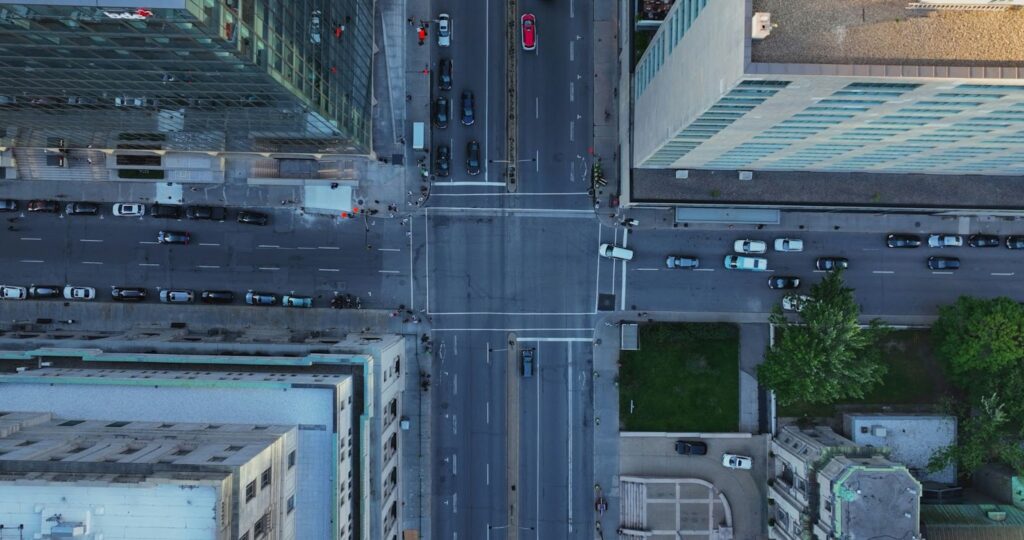
Language can also present a barrier for non-French speakers. Road signs are predominantly in French, including directional signage and construction warnings. Familiarizing yourself with common terms such as “Sortie” (Exit) and “Travaux” (Roadwork) enhances your confidence.
Montreal’s driving culture tends to be assertive. Quick merges and tight following distances are common, so maintaining controlled speed and proactive scanning is critical. When approaching intersections, watch carefully for pedestrians, particularly in dense neighbourhoods like Plateau-Mont-Royal.
Dealing with Traffic in Big Canadian Cities: Smart Urban Driving Strategies
More broadly, dealing with traffic in big Canadian cities requires adaptable skills. Whether in Toronto, Ottawa, or Montreal, urban congestion creates similar pressures: stop-and-go movement, unpredictable lane changes, and limited reaction time.
If your goal is avoiding traffic delays in Canada’s big cities, consider these principles:
-
- Travel outside peak rush hours when possible
- Travel outside peak rush hours when possible
-
- Use navigation apps with live congestion updates
- Use navigation apps with live congestion updates
-
- Maintain safe buffer zones around your vehicle
- Maintain safe buffer zones around your vehicle
-
- Stay calm during unexpected slowdowns
- Stay calm during unexpected slowdowns
Finally, applying practical tips for driving in urban traffic Canada, such as smooth lane transitions, avoiding aggressive acceleration, and anticipating brake lights of several vehicles ahead, significantly reduces accident risk.
Urban traffic is not just about reaching your destination. It’s about managing risk, preserving focus, and driving defensively in high-density environments.
Urban traffic may be unavoidable, but stress and preventable collisions are not!
 Build safe, defensive driving habits with experienced instructors with Drivisa!
Article By: Linh Dong
