

Yaman Marwah
Head of Legal

Fares Albonai
Founder

Basel Kabbouch
Co-founder & COO

Ali Zaydan
Co-founder & CEO

Elias Toss
Chief Technology Officer
New Ontario MTO Foreign License Regulation: Step-by-Step License Conversion Scenarios and Insurance Impacts
Article 1: Understanding the New Ontario MTO Foreign License Regulation: Step-by-Step License Conversion Scenarios and Insurance Impacts The landscape of driver licensing for newcomers to Ontario has shifted dramatically under recent Ministry of Transportation (MTO) updates. For years, immigrants arriving in the Greater Toronto Area (GTA), Ottawa, and other parts of Ontario could present extensive driving history from their home countries to fast-track directly to a full G driver’s license. However, under the new MTO regulations, Ontario has implemented a strict cap on foreign driving experience recognition: regardless of whether you have driven for two years or twenty years in a non-reciprocal country, the MTO will now grant a maximum equivalence of only 1 year of driving experience, hence you can apply for the G2 exam only. This sweeping regulatory change carries massive operational, financial, and safety implications for thousands of newcomers arriving in Ontario each month. Understanding how this system works, examining real-world conversion scenarios, and analyzing the cascading effects on auto insurance premiums is critical for any newcomer trying to navigate the system safely. Enrolling in a certified driving school and choosing certified driving classes has shifted from being a casual recommendation to an absolute financial necessity. The Core Mechanics of the New 1-Year Equivalence Rule Previously, a driver from a country without a reciprocal license agreement (such as India, Pakistan, Nigeria, or Brazil) could declare their foreign driving history at a DriveTest centre. If they provided an official Letter of Authentication along with their foreign license, the MTO would recognize their full history, allowing them to bypass the mandatory G2 stage and take their full G road test immediately. Under the updated regulation, that pathway is permanently closed. The MTO now enforces a standard ceiling: Maximum Automatic Credit: 12 months (1 year) of driving experience. The Immediate Impact: Because a driver needs at least 24 months of recognized experience to attempt the final G road test, all applicants from non-reciprocal nations are now legally barred from fast-tracking directly to a full G license. Every single applicant must enter the Graduated Licensing System at the G2 phase, serving time on Ontario roads before they can even book a G road test. Step-by-Step License Conversion Scenarios To see how this law plays out on the ground, let’s look at three common real-world conversion scenarios that professional driving instructors see every day at DriveTest locations across the GTA and Ottawa. Scenario A: The Highly Experienced Veteran (5+ Years of Foreign Driving) The Applicant: An immigrant arrives in Toronto with 8 years of clean driving experience from their home country and holds an official Letter of Authentication. The Process: They present their documents at a DriveTest centre and pass the written G1 knowledge test. Under the old rules, they would book a full G road test the same day. Under the new rules, the clerk inputs their foreign data but caps the recognized experience credit at exactly 12 months. The Result: Because they have been granted 12 months of credit, they are allowed to bypass the standard 12-month waiting period required for a brand-new G1 driver. They can book a G2 road test immediately. However, once they pass that G2 road test, they must wait an additional 12 months as a G2 licensed driver to accumulate the remaining experience needed to qualify for the final G road test. Scenario B: The Intermediate Driver (Exactly 1 Year of Foreign Driving) The Applicant: A newcomer arrives in Ottawa with exactly 12 months of certified driving experience from abroad. The Process: They pass their G1 written exam. The MTO applies their 12 months of foreign credit to their file. The Result: This driver experiences the exact same outcome as the 8-year veteran in Scenario A. They can skip the G1 waiting period and take their G2 road test immediately. This level-setting highlights how the new regulation flattens the playing field, treating raw intermediate drivers and seasoned professionals identically. Scenario C: The Novice Foreign Driver (Less than 1 Year of Foreign Driving) The Applicant: A newcomer has only held their foreign driver’s license for 6 months before moving to Ontario. The Process: They pass their G1 test, and the MTO credits their account with 6 months of experience. The Result: Because they do not hit the 12-month cap, they must wait out the remaining balance (6 months) in the G1 phase before they are legally permitted to take a G2 road test. However, this wait time can be significantly minimized if they enroll in a certified BDE course at an MTO-approved driving school. The Financial Repercussions on Auto Insurance The most severe consequence of this new MTO regulation is not the delay in licensing—it is the financial impact on auto insurance premiums. Ontario auto insurance companies determine premium rates based on actuarial risk profiles. Two of the most heavily weighted factors in these risk formulas are licensing class and years of verified Canadian driving experience. By forcing all foreign drivers from non-reciprocal nations to hold a G2 license for at least a year, the MTO has inadvertently reclassified thousands of experienced global drivers as “high-risk novices” within insurance databases. [Foreign Driver Enters ON] ➔ [MTO Caps Credit at 1 Year] ➔ [Forced into G2 License Status] ➔ [Insurance Rates Spike as “Novice”] A G2 license indicates to an insurer that the driver has restricted driving privileges, is subject to zero-blood-alcohol limits, and cannot carry an unlimited number of young passengers at night. Consequently, insurance premiums for G2 drivers are significantly higher than those for full G drivers. Newcomers who previously expected to transition rapidly to a full G license—and enjoy lower insurance rates—are now locked into inflated G2 premium tiers for a minimum of 12 months. In high-density areas like Toronto, Mississauga, and Brampton, this regulatory trap can easily add $150 to $300 per month to an individual’s car insurance bill. Mitigating the Risk with Certified Driving Instruction Because newcomers are locked into the G2 phase, they must find alternative methods to demonstrate risk
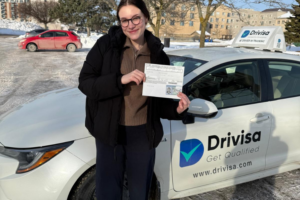

A Certified BDE Course is the Best Investment Under the New MTO Foreign License Rules
Why a Certified BDE Course is the Best & TOP Investment Under the New MTO Foreign License Rules The recent implementation of the Ministry of Transportation’s (MTO) new foreign license experience cap has completely upended the traditional path to getting a driver’s license in Ontario. By limiting the automatic credit for driving experience from non-reciprocal countries to a maximum of 12 months, the province has fundamentally altered the financial and timeline calculations for every immigrant landing in Ontario. If you are a newcomer starting your life in the GTA, Ottawa, London or Kingston, you can no longer rely on your past driving history to clear the regulatory hurdles of the DriveTest system. In this new environment, enrolling in an MTO-approved Beginner Driver Education (BDE) course through a licensed driving school has emerged as the single best investment a new resident can make. Far from being an optional luxury or a simple refresher, a certified BDE program provides a multi-layered financial and strategic shield against the delays and premium costs triggered by the new policy. Navigating the New Multi-Stage Timeline Defensively To appreciate the true value of a certified BDE course, one must first look at the timeline barrier created by the new law. Under the current framework, an experienced foreign driver from a non-reciprocal nation is credited with 1 year of experience, allowing them to take their G2 road test right away. However, once they pass that test, they are forced to wait 12 full months before they can take the final G road test. Standard Path (New Rules): [Pass G1] ➔ [Take G2 Instantly] ➔ [Mandatory 12-Month Wait] ➔ [Take G Road Test] With Drivisa BDE Program: [Pass G1] ➔ [Take G2 Instantly] ➔ [Strategic Skills Training] ➔ [Insurance Discount Active] While the BDE course cannot legally shorten the mandatory 12-month G2-to-G waiting period for someone who has already applied foreign credit to skip the G1 wait, its value shifts dramatically to an operational and educational safeguard. Newcomers who fail their initial G2 road test due to unfamiliarity with Ontario’s distinct traffic cultures (such as streetcars in Toronto, roundabouts in Ottawa, or severe winter weather patterns) find themselves trapped in a costly loop of re-testing fees and extended delays. Investing in structured driving classes ensures that your very first road test attempt is a success. Experienced driving instructors understand the precise errors that cause automatic failures on Ontario road tests—such as incorrect blind-spot scanning, improper intersection positioning, and flawed lane changes. Passing on your first try keeps your licensing momentum moving forward, rather than stranding you without driving privileges. The Core Incentive: Maximizing Insurance Optimization The absolute financial justification for buying a BDE package under the new regulation centers on car insurance optimization. Because the new MTO rule forces all non-reciprocal foreign drivers to remain at the G2 level for a minimum of one year, auto insurance companies automatically price these drivers under their highest-risk novice tiers. A standard G2 driver in Ontario, particularly in high-density urban environments like Toronto, Mississauga, and Brampton, face some of the highest insurance rates in North America. These rates can easily run between $2,500 and $4,500 annually for a basic vehicle. However, Ontario auto insurance providers offer a substantial, standardized discount to any driver who completes a certified MTO program. When a driving school like Drivisa processes your successful graduation from a digital BDE course, that certification is uploaded directly to your Ministry driver abstract. When insurance brokers pull your record, this certification signals that you have undergone rigorous defensive driving training, immediately lowering your risk tier. The resulting insurance discount usually ranges from 10% to 20% annually. Year 1 Return on Investment (ROI) Breakdown Financial Metric Without BDE Course With Drivisa BDE Course ($494) Net Financial Impact Average Annual G2 Insurance $3,600.00 $2,880.00 (Assumes 20% Discount) Saves $720.00 on Insurance Upfront Course Cost $0.00 $494.00 Costs $494.00 Total First-Year Balance $3,600.00 $3,374.00 Net Profit of $226.00 As demonstrated by the data, the BDE course effectively pays for itself within the first year alone. Beyond the first twelve months, that BDE certification remains on your driving record permanently, continuing to yield compounding insurance dividend savings as you transition to your full G license. Acquiring Critical Regional Safety Competencies Beyond the financial and administrative benefits, investing in professional driving classes from an MTO-approved driving school provides vital safety skills. Driving habits that are perfectly acceptable or necessary in other parts of the world can be dangerous—or illegal—on Ontario roads. Certified BDE courses cover essential regional driving modules: Vulnerable Road User Safety: Understanding how to safely share dense urban streets with streetcars, cyclists, and pedestrians in busy downtown cores. Winter Driving Protocols: Learning how to manage black ice, steering clear of snowbanks, controlling skids, and adjusting stopping distances during harsh Ontario winters. Advanced Defensive Driving Systems: Utilizing the “See-Think-Do” methodology to predict and avoid hazards before they cause a collision. By choosing a modern, digital-first driving school like Drivisa, newcomers can complete the entire classroom portion of the BDE curriculum at their own pace via a smartphone app. This format eliminates the need to travel to boring, physical classrooms, making it highly convenient for busy professionals and students adjusting to a new life in Canada. Investing in a BDE course means buying peace of mind, long-term financial savings, and the security of knowing you can keep your family safe on Ontario roads.

Should You Choose Downsview or Metro East DriveTest Centre for Your Road Test?
Disclaimer: All drivetest centers are the same if you are a good driver.Choose Downsview DriveTest Centre if you prefer navigating industrial park routes and standard multi-lane highways like Highway 401. Choose Metro East DriveTest Centre if you are highly confident with complex urban intersections, heavy commercial traffic, and the narrow, fast-paced ramp merges of the Don Valley Parkway (DVP). Your success in the driving exam depends entirely on your specific comfort level with high-speed lane changes versus congested urban street management. Dive through this blog for comparative analysis of both testing centers’ routes, pass rates, and environments. Downsview DriveTest Centre: Location Overview & Key Features Located in the north-central region of Toronto at 37 Carl Hall Road, the Downsview DriveTest Centre is positioned within the historic Downsview Park area. This location offers unique geographic advantages and specific structural challenges that every candidate must understand before booking their evaluation. The Testing Environment The surrounding area of Downsview consists of a sprawling commercial and industrial park environment. The internal roadways within the park feature: Lower speed limits, typically ranging between 40 km/h and 50 km/h. This provides a relatively controlled setting for the initial phases of your evaluation, such as parallel parking, three-point turns, and roadside stops. Highway Evaluation Mechanics For applicants undertaking the G-level certification, the highway component almost exclusively utilizes Highway 401. This segment demands flawless compliance with standard Ontario road test rules. Entering Highway 401 from the Allen Road or Keele Street access ramps requires rapid acceleration to match the legal flow of traffic, which is often moving at 100 km/h. The merge lanes at Downsview are standard in length, allowing a well-prepared driver sufficient distance to execute lane changes efficiently. Metro East DriveTest Centre: Location Overview & Key Features Situated at 1448 Lawrence Avenue East in North York, the Metro East DriveTest Centre is renowned for its intense, fast-paced, and densely populated urban testing routes. It caters to a high volume of applicants daily, making it a demanding environment for novice drivers. The Testing Environment Unlike the isolated park setting of Downsview, Metro East immediately places the driver into a bustling commercial and residential nexus. The primary routes navigate major arterial roads such as: Lawrence Avenue East Victoria Park Avenue Underhill Drive These roadways feature: Frequent transit bus stops Sudden pedestrian crossings Mid-block turning lanes Heavy delivery truck traffic Successfully navigating this environment requires an exceptional grasp of space management and proactive scanning habits. The Don Valley Parkway (DVP) Challenge The G-level highway assessment at Metro East routinely incorporates the Don Valley Parkway (DVP). The DVP presents a radically different environment compared to Highway 401. It is characterized by: Winding curves Shorter acceleration ramps Unpredictable congestion patterns Merging onto the DVP requires precise timing and excellent speed control, as the sightlines are frequently compromised by geometric constraints and elevation changes. Comparative Matrix: Downsview vs. Metro East Review this structured data for any comprehensive driving test guide. Evaluation Parameter Downsview DriveTest Centre Metro East DriveTest Centre Primary Location Typology Industrial/Commercial Park & Suburban Densely Populated Urban Arterial Roads Main Highway Utilized Highway 401 (Standard multi-lane) Don Valley Parkway (DVP – Winding, short ramps) Traffic Volume Density Moderate to High (Predictable peaks) Consistently High (Heavy transit & pedestrians) Speed Transition Zones Standard transitions (40 to 50 to 100 km/h) Frequent, rapid fluctuations (50 to 60 to 90/100 km/h) Parking Evaluation Areas Quiet, wide industrial service roads Narrow, active residential side streets Critical Behavioral Requirements and Traffic Scenarios Passing your examination requires adherence to the official administrative guidelines. Incorporating professional driving exam prep into your routine will help you master the specific behaviors required for each center. Navigating The Downsview Industrial Intersections While the industrial roads around Downsview appear quiet, they present specific hazards. Large commercial vehicles frequently execute wide turns, which requires you to maintain proper stopping distances behind the crosswalk or stop line. Managing Metro East’s Pedestrian and Transit Density At Metro East, your observational skills are put to the ultimate test. You must continuously scan for transit buses pulling out of designated bays. According to Ontario traffic laws, you must yield the right-of-way to these buses when they signal their intention to re-enter the lane. Statistical Realities and The Myth of Easy Centres Statistical data over the years indicates that historical pass rates fluctuate minimally between these two primary Toronto hubs. The determining factor is never the location, but rather the applicant’s adaptability to the specific geographic features of that route. Thorough preparation according to official road test rules is the only definitive pathway to achieving your driver’s license. Master Your Licensing Journey with Drivisa No matter which center you select, entering your practical evaluation with absolute confidence requires professional guidance and structured learning. At Drivisa, we specialize in demystifying the local routes for both Downsview and Metro East. Our platform connects you with elite, certified driving instructors who provide personalized, data-driven training sessions. Our specialized curriculum and flexible scheduling options are designed to serve as your ultimate driving exam prep resource, equipping you with the physical skills and mental readiness needed to pass your evaluation on the very first attempt. Ready to transform your driving potential? Explore our premium drive test classes and book your certified vehicle for test day by visiting us directly at our official website. Frequently Asked Questions (FAQs) 1. Can I practice driving on the actual exam routes at Downsview and Metro East? Yes. While you cannot practice inside the formal DriveTest property, all public roads, including surrounding industrial parks and highways, are fully accessible for legal practice anytime before your examination. 2. What happens if traffic is at a complete standstill on the highway during my test? If the highway is congested, you must still demonstrate proper observation, safe merging habits, maintaining appropriate following distances, and smooth speed control suited to the prevailing slow-moving traffic conditions. 3. Which center is generally considered better for the winter season? Downsview’s wide industrial park roads are often cleared rapidly, whereas Metro East’s high-density commercial

What Defensive Driving Techniques Help Beginners Around Square One Mississauga?
Learning to drive is an exciting milestone, but it also comes with significant responsibility. For beginners navigating busy areas such as Square One Mississauga, developing safe driving habits from day one is essential. While learning the basics of steering, parking, and lane changes is important, understanding defensive driving techniques can make the difference between reacting to danger and avoiding it altogether. Defensive driving is more than simply following traffic rules. It is a mindset that helps drivers anticipate risks, stay alert, and make safer decisions in real-world situations. Whether you are preparing for your G2 road test or looking for the best driving instructor Mississauga, learning defensive driving techniques early can help you become a safer and more confident driver. What Is Defensive Driving? Defensive driving is a proactive approach to road safety that focuses on awareness, anticipation, and risk management. Instead of assuming that every road user will follow the rules, defensive drivers prepare for unexpected situations and adjust their actions accordingly. Key Principles of Defensive Driving Defensive Driving Principle Why It Matters Continuous observation Helps identify hazards early Hazard prediction Reduces reaction time Safe following distance Prevents rear-end collisions Speed management Improves vehicle control Focused driving Minimizes distractions Calm decision-making Reduces panic reactions For beginners, these habits build a strong foundation that can reduce accident risks and encourage lifelong safe driving behavior. Essential Defensive Driving Techniques Every Beginner Should Learn 1. Maintain a Safe Following Distance One of the most common mistakes new drivers make is following too closely. Defensive driving experts recommend using the 3-second rule. Select a fixed object ahead and ensure at least three seconds pass between the vehicle in front and your vehicle reaching that point. During rain, snow, or poor visibility, increase the gap to four to six seconds. 2. Scan the Road Continuously Many beginners focus only on the vehicle directly ahead. Defensive drivers take a wider view of their surroundings. Always monitor: Vehicles in nearby lanes Pedestrians crossing intersections Cyclists and motorcyclists Traffic signs and signals Construction zones and road hazards Continuous scanning gives you more time to react safely. 3. Check Blind Spots Every Time Mirrors provide valuable information, but they cannot show everything. Before changing lanes or merging, perform a quick shoulder check to ensure no vehicle is hidden in your blind spot. This simple habit can prevent many avoidable collisions. 4. Adjust Speed Based on Conditions Speed limits are designed for ideal driving conditions. However, weather, traffic, and road conditions often require drivers to adjust accordingly. Reduce speed when: Roads are wet or icy Visibility is poor Traffic congestion increases Driving in unfamiliar neighborhoods A defensive driver prioritizes safety over speed. 5. Eliminate Distractions Distracted driving remains one of the leading causes of accidents across Canada. Avoid distractions such as: Texting while driving Using social media Eating behind the wheel Adjusting devices unnecessarily Maintaining complete focus helps you identify and respond to hazards faster. 6. Anticipate Other Drivers’ Actions Defensive driving teaches you to expect the unexpected. Always be prepared for drivers who may: Change lanes suddenly Forget to signal Brake unexpectedly Run yellow or red lights Anticipation allows you to react calmly rather than make sudden decisions. 7. Use Smooth Vehicle Control Aggressive steering, hard braking, and sudden acceleration can reduce vehicle stability. Instead: Brake gradually Accelerate smoothly Make controlled steering adjustments Smooth driving improves comfort, control, and safety. 8. Be Extra Careful at Intersections Intersections are among the most common locations for traffic collisions. Before proceeding: Check both directions carefully Watch for distracted drivers Slow down even when you have the right of way Stay alert for pedestrians A few extra seconds of caution can prevent serious accidents. Defensive Driving Tips for Different Road Conditions Driving in Rain Safety Tip Benefit Increase following distance More reaction time Use headlights Better visibility Reduce speed Improved traction Avoid sudden braking Prevents skidding Driving in Snow and Ice Drive slowly and steadily Increase following distance significantly Avoid abrupt steering movements Brake gently and early Night Driving Reduce speed Keep windshields clean Watch carefully for pedestrians Avoid staring directly at oncoming headlights Heavy Traffic Driving Stay patient Avoid aggressive lane changes Leave adequate space between vehicles Maintain a consistent speed Psychological Side of Defensive Driving Driving safely is not only about physical skills. Your mindset matters too. Emotional Control Frustration and road rage can lead to poor decisions. Defensive drivers remain calm even during stressful situations. Focus and Awareness Safe driving requires full attention. Defensive drivers stay mentally engaged throughout every trip. Confidence Without Overconfidence Confidence helps drivers make decisions effectively, but overconfidence can lead to risky behavior. Successful drivers maintain a healthy balance. Common Beginner Driving Mistakes and Solutions Common Mistake Defensive Driving Solution Following too closely Maintain proper distance Ignoring blind spots Perform shoulder checks Speeding Match conditions and traffic Hesitation Practice confident decision-making Missing road signs Stay alert and observant Why Professional Driving Lessons Matter Many beginners rely on family or friends for driving practice. While helpful, professional instruction provides structured learning that is difficult to replicate. Benefits include: Real-world driving experience Personalized feedback Road test preparation Hazard awareness training Defensive driving skill development Students enrolled in drivers ed driving classes often develop safer habits faster than self-taught learners. For learners seeking professional driving lesson in Mississauga, structured instruction can significantly improve confidence behind the wheel while preparing them for real-world traffic situations. How Drivisa Helps Beginners Become Defensive Drivers Learning defensive driving becomes easier when you have access to the right tools and instructors. Drivisa is not a traditional driving school. It is a modern driving education platform designed to simplify every stage of the licensing journey. With Drivisa, learners can: Access flexible online driver education programs Connect with MTO-certified instructors Book lessons directly through a mobile-first platform Practice for G1 tests using realistic simulations Prepare for G2 and G road tests with confidence Learn practical defensive driving techniques from experienced professionals Whether you are searching for Mississauga driver’s license classes, beginner training, or a

La nouvelle réglementation du MTO concernant les permis de conduire étrangers
Comprendre la nouvelle réglementation du MTO concernant les permis de conduire étrangers : Scénarios de conversion et impacts sur les assurances Le cadre réglementaire régissant la conversion des permis de conduire étrangers en Ontario a subi une transformation majeure sous la direction du ministère des Transports de l’Ontario (MTO). Historiquement, les nouveaux arrivants s’installant dans la région du Grand Toronto (GTA), à Ottawa ou dans d’autres municipalités de la province pouvaient faire valoir leur historique de conduite international pour obtenir directement un permis de conduire de catégorie G (le permis complet). Désormais, la nouvelle réglementation du MTO impose un plafond strict : peu importe que vous ayez conduit pendant deux ans ou vingt ans dans un pays etranger non réciproque, le MTO n’accorde plus qu’une équivalence maximale de 1 an d’expérience de conduite. Cette mise à jour réglementaire entraîne des répercussions opérationnelles et financières majeures pour les milliers d’immigrants qui arrivent chaque mois en Ontario. Comprendre les mécanismes de cette règle, analyser les scénarios de conversion et évaluer l’impact direct sur les primes d’assurance automobile est devenu indispensable. Dans ce contexte, s’inscrire dans une école de conduite agréée et suivre des cours de conduite professionnels n’est plus une simple option, mais une nécessité financière absolue pour protéger son budget. Les fondements de la nouvelle règle de l’équivalence d’un an Auparavant, un conducteur originaire d’un pays n’ayant pas signé d’accord de réciprocité avec l’Ontario (comme l’Inde, le Cameroun, le Maroc, l’Algérie ou le Brésil) pouvait présenter son permis de conduire accompagné d’une lettre d’authentification officielle dans un centre DriveTest. Le système reconnaissait alors l’intégralité de son expérience, lui permettant de sauter l’étape intermédiaire du permis G2 et de passer directement l’examen pratique G. Avec la nouvelle directive du MTO, cette voie rapide est définitivement supprimée. Le ministère applique désormais un plafond standardisé : Crédit d’expérience maximal : 12 mois (1 an). La conséquence directe : Étant donné que le système ontarien exige un minimum de 24 mois d’expérience reconnue pour être admissible à l’examen final G, tous les candidats des pays non réciproques sont désormais légalement bloqués. Ils doivent obligatoirement intégrer le système de licences graduées à l’étape du permis G2 et conduire sur les routes ontariennes pendant au moins un an avant de pouvoir postuler au permis G. Scénarios pratiques de conversion de permis Pour bien comprendre la mise en œuvre de cette loi, examinons trois scénarios typiques auxquels les moniteurs de conduite professionnels sont confrontés quotidiennement dans les centres DriveTest de Toronto et d’Ottawa. Scénario A : Le conducteur chevronné (Plus de 5 ans de conduite à l’étranger) Le candidat : Un nouvel arrivant s’installe à Ottawa avec 10 ans d’expérience de conduite sans accident dans son pays d’origine, documents d’authentification à l’appui. Le processus : Le candidat réussit l’examen théorique écrit G1. Le préposé du centre DriveTest enregistre son expérience mais plafonne le crédit à 12 mois maximum. Le résultat : Grâce au crédit de 12 mois, le conducteur est dispensé de la période d’attente obligatoire de 12 mois imposée aux parfaits débutants. Il peut réserver son examen pratique G2 immédiatement. Cependant, après avoir réussi l’examen G2, il doit obligatoirement conduire avec ce permis restrictif pendant 12 mois complets avant de pouvoir accumuler le temps nécessaire pour passer l’examen final G. Scénario B : Le conducteur intermédiaire (Exactement 1 an de conduite à l’étranger) Le candidat : Une personne arrive dans la région de Toronto avec précisément un an d’historique de conduite certifié. Le processus : Elle réussit son examen écrit G1 et le MTO applique son crédit de 12 mois. Le résultat : Ce conducteur obtient exactement le même traitement que le vétéran du Scénario A. Il peut passer l’examen G2 immédiatement, mais devra attendre un an sous la catégorie G2 avant de passer le permis G. Cette uniformisation réglementaire traite de la même manière les conducteurs intermédiaires et les professionnels de la route. Scénario C : Le conducteur novice à l’étranger (Moins d’un an d’expérience) Le candidat : Un immigrant a obtenu son permis de conduire à l’étranger seulement 6 mois avant son départ pour l’Ontario. Le processus : Il réussit l’examen G1, et le MTO lui accorde un crédit de 6 mois. Le résultat : N’atteignant pas le plafond de 12 mois, il doit attendre la différence (soit 6 mois supplémentaires) au stade G1 avant de pouvoir réserver son examen pratique G2. Néanmoins, cette attente peut être optimisée en s’inscrivant à un cours de formation de conduite débutante (FCD) dans une école de conduite certifiée par le MTO. Les conséquences financières sur l’assurance automobile L’impact le plus lourd de cette décision du MTO ne réside pas dans le délai administratif, mais bien dans le coût de l’assurance automobile. En Ontario, les assureurs calculent les primes en fonction de profils de risque rigides. Les deux critères les plus influents sont la catégorie du permis de conduire et le nombre d’années d’expérience de conduite vérifiables au Canada. En obligeant tous les conducteurs issus de pays non réciproques à conserver un permis G2 pendant au moins un an, le MTO classe automatiquement ces automobilistes expérimentés dans la catégorie des « conducteurs novices à haut risque » auprès des assureurs. [Arrivée en Ontario] ➔ [Plafond MTO à 1 an] ➔ [Statut obligatoire Permis G2] ➔ [Primes d’assurance au tarif “Novice”] Le permis G2 indique à l’assureur que le conducteur fait face à des restrictions légales (taux d’alcoolémie strict à zéro, restrictions sur le transport de passagers mineurs la nuit). Par conséquent, les tarifs d’assurance pour un titulaire de permis G2 sont considérablement plus élevés que pour un permis G complet. Les nouveaux arrivants qui pensaient réduire rapidement leurs coûts d’assurance en obtenant le permis G se retrouvent bloqués avec des tarifs prohibitifs pendant un an. Dans des zones urbaines denses comme Toronto, Mississauga ou Ottawa, cette situation peut ajouter entre 150 $et 300$ de plus par mois sur la facture d’un ménage. Atténuer l’impact grâce aux programmes certifiés du MTO Face à cette hausse inévitable des coûts liée

How the New MTO Regulation Inflates Car Insurance for New Drivers with Foreign Licenses
The Ripple Effect: How the New MTO Regulation Inflates Car Insurance for New Drivers with Foreign Licenses For new residents moving to Ontario, purchasing a vehicle and securing auto insurance are key steps toward establishing personal and professional independence. However, a major regulatory shift by the Ministry of Transportation (MTO) has created a costly barrier for drivers arriving with foreign experience. By capping the recognized driving history from non-reciprocal countries at a maximum of 12 months, the MTO has triggered an unintended ripple effect across the auto insurance sector, leading to a steep rise in operating costs for thousands of newly arrived drivers. To navigate this new reality, drivers must understand how Ontario’s insurance framework interacts with the MTO’s licensing tiers, why holding a G2 license permanently inflates your risk premium, and how utilizing an MTO-approved driving school can help lower these high monthly costs. The Actuarial Problem: Why the G2 Status is a Financial Penalty! Auto insurance companies operate entirely on risk prediction models. Actuaries look at decades of historical data to determine which categories of drivers are most likely to get into collisions and file financial claims. In Ontario’s heavily regulated insurance ecosystem, your licensing status serves as a primary filtering metric for risk calculation. [MTO 1-Year Experience Cap] ➔ [Forced G2 License Designation] ➔ [Actuarial High-Risk Classification] ➔ [Premium Inflation] Under the new MTO regulations, because foreign drivers from non-reciprocal nations cannot receive credit for more than 1 year of experience, they are blocked from taking the full G exam right away. Instead, they must hold a G2 license for at least 12 months. From an insurance perspective, a G2 license signals a novice driver with restricted road privileges. Statistics show that novice drivers are involved in accidents at a disproportionately high rate. As a result, insurance companies apply an immediate, significant premium penalty to any driver holding a G2 license. An immigrant with 15 years of accident-free experience in a city like London, Mumbai, or Lagos is viewed by Ontario insurance systems exactly the same as a 16-year-old high school student who has just passed their first road test. The global driving history is erased by the MTO’s 1-year cap, locking the driver into a high-risk novice premium tier for a full year. Geography and Premium Density: The Cost Across Ontario Cities The financial impact of this G2 designation varies depending on where you settle in Ontario, as insurance companies also price coverage based on localized collision density and claims fraud metrics. Newcomers settling in major urban areas face a compounding financial hit. 1. The Greater Toronto Area (GTA) The GTA features some of the highest auto insurance rates in Canada. In high-density municipalities such as Brampton, Mississauga, Scarborough, and Toronto proper, a driver holding a restricted G2 license can easily face baseline liability premiums ranging from $250 to $450 per month. For a newcomer balancing rent, groceries, and settlement costs, an unexpected $4,000 annual vehicle insurance bill can disrupt their entire financial plan. 2. Ottawa, Eastern & Western Ontario While insurance rates in Ottawa and Northern, Eastern and Western Ontario are generally lower than in the GTA, the G2 premium penalty remains severe. A foreign driver forced into G2 status in Ottawa can expect to pay anywhere from $250 to $450 per month. While more manageable than Toronto rates, this still represents thousands of dollars in extra costs over the mandatory 12-month waiting period before the driver can test for a full G license. Breaking Down the Premium Equation To understand exactly why your bills are so high under this new regulation, it helps to see what components make up an Ontario insurance premium score for a foreign driver: Canadian Driving History (Weighted 40%): Insurers look for verifiable North American driving history. Because the MTO caps your foreign credit at 1 year, your history score is low. Licensing Class Tier (Weighted 30%): Being locked into the G2 tier automatically prevents you from qualifying for the preferred rate structures reserved for full G license holders. Vehicle Risk Profile (Weighted 20%): The make, model, and safety features of the car you drive. Postal Code/Location (Weighted 10%): Regional traffic density and local weather risks. Because the first two categories make up 70% of the entire premium calculation, the MTO’s 1-year experience cap directly negatively impacts the most critical parts of your insurance rating. Defensive Financial Measures: The Strategic Role of BDE Certification Newcomers caught in this regulatory trap cannot alter the MTO’s laws, but they can alter how insurance companies view their specific risk profile. The most effective way to lower inflated G2 insurance rates is to complete an MTO-approved Beginner Driver Education (BDE) course. By graduating from a certified MTO program offered by an approved driving school like Drivisa, you earn a formal certification that is logged directly into your official Ontario driving record. This certification tells insurance companies that despite your mandatory G2 status, you have completed extensive professional training in defensive driving techniques, accident avoidance, and Ontario traffic law. Most insurance companies in Ontario give a significant premium discount to BDE graduates, which typically ranges from 10% to 20%. In high-rate areas like Toronto, a 15% discount on a $350 monthly premium saves you $52.50 per month, or $630 over the course of the first year post the program.