
Getting your G2 is the moment things start to feel real. No more needing someone beside you, no more highway restrictions, no more asking a parent to ride along. It is the first taste of actual driving independence, and for most new drivers in Ontario, it cannot come soon enough.
But the path from G1 to G2 trips a lot of people up, not because it is complicated, but because there is a lot of misinformation floating around about timelines, practice requirements, and what the test actually involves. Here is a straightforward breakdown of what you need to know.
How Long Do You Have to Wait?
Ontario’s graduated licensing system builds in mandatory waiting periods between tests, and the length depends on whether you complete an approved driving course.
Without a BDE course, you must hold your G1 for at least 12 months before booking your G2 test. Complete an MTO-approved Beginner Driver Education program, and that waiting period drops to 8 months. If you have completed a government-approved driving education course, you can book your G2 test after just 8 months instead of 12 MoneySense (Humberview Group, 2024).
Those four months matter. As we covered in our previous post on BDE savings, that shorter wait period also means four fewer months paying G1-level insurance restrictions, which adds up on top of the premium discount BDE graduates already receive.
How Much Practice Do You Actually Need?
There is no legally mandated minimum number of driving hours before your G2 test. The MTO does not require you to log a specific count. What it does require is that you demonstrate safe, confident driving on the day of your test, and that standard is harder to meet without real, varied practice.
Most driving instructors suggest aiming for at least 40 to 50 hours of total supervised practice before your test. Beginners are generally advised to complete 10 to 20 hours of professional in-car lessons, plus an additional 20 to 30 hours of practice with a licensed driver MoneySense. That combination of structured instruction and independent practice tends to produce the most well-rounded results.
More important than hitting a specific number is the variety of conditions you drive in. Practicing only in your neighbourhood on quiet Sunday mornings will not prepare you for a test that may include busy intersections, school zones, and multi-lane roads. The MTO recommends practicing starts, stops, turns, lane changes, parking, reversing, and driving through both controlled and uncontrolled intersections in a range of environments (DriveTest.ca, 2025).
What Does the G2 Test Actually Cover?
The G2 road test is a city-based driving assessment that typically takes about 15 to 20 minutes. It assesses basic driving skills and does not include highway driving, which is reserved for the full G road test CBC News (Trubicars, 2025).
During the test, an examiner will evaluate you on seven core areas: starting, backing, driving along, intersections and railway crossings, turns, parking, and stopping or starting on a grade. The test does not require perfection. A few small mistakes are fine; examiners care most about safe, consistent driving CBC News. However, a single serious error, such as speeding in a school zone or failing to yield when required, can result in an immediate fail.
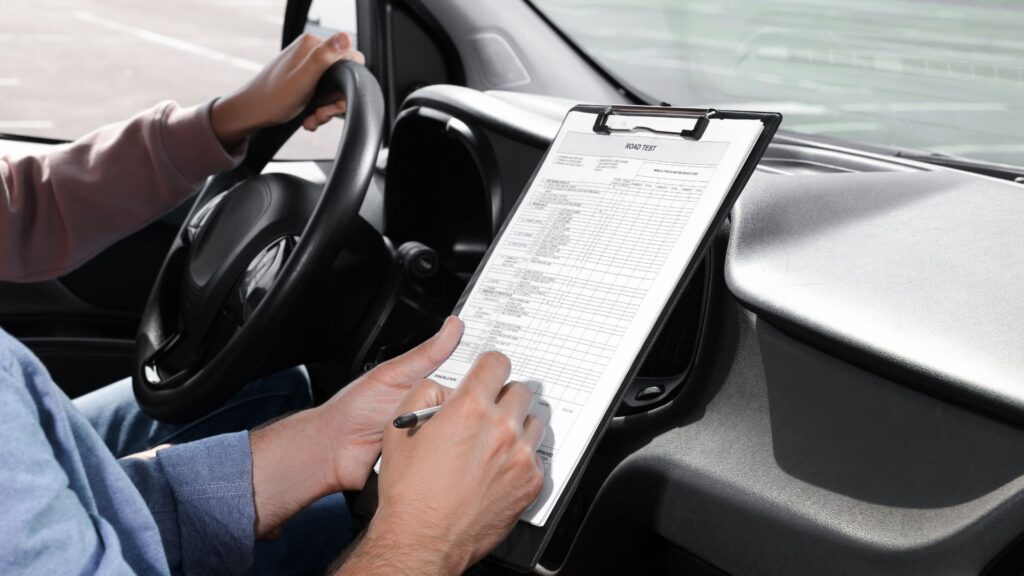
The five most common reasons people fail the G2 test are: forgetting to signal, not following posted speeds, failing to check mirrors frequently enough, rolling through stop signs rather than coming to a complete stop, and making errors during parallel parking (ThinkInsure, 2025).
Can You Book Your G2 Test Before Finishing BDE?
Technically yes, but it is not a good idea. You will need to show proof of completion from an MTO-approved driving school to qualify for the reduced waiting period MoneySense. If your completion certificate is not registered in time, you may not be eligible to book at the 8-month mark, and you will miss out on the insurance benefits that come with finishing the course.
The simpler approach: complete the BDE program, receive your certificate, then book your test. Trying to do it out of order creates unnecessary risk and potential delays.
Does Where You Take the Test Matter?
Pass rates vary significantly across Ontario depending on location. Northern Ontario test centres tend to have the highest G2 pass rates, with some averaging above 75%, while urban GTA centres like Brampton have considerably lower pass rates Hubinsurancehunter (Bramptonist, 2023). Factors like traffic density, route complexity, and road conditions all influence how difficult a given test centre is to pass at.
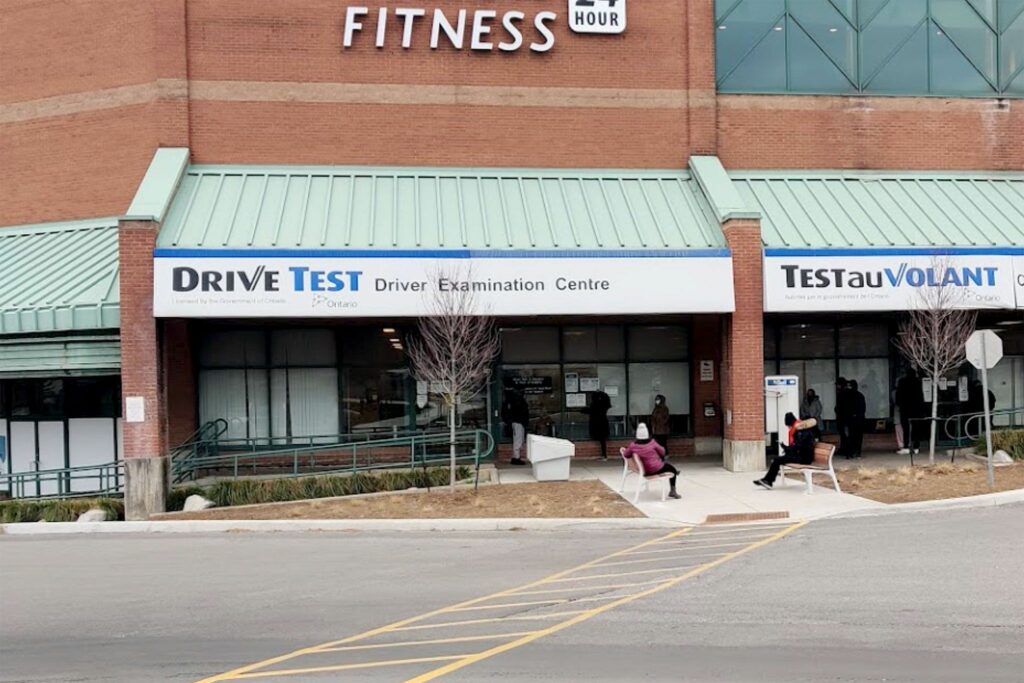
That said, choosing a location you are not familiar with purely for a better pass rate can backfire. Knowing the roads around your test centre well, including where the tricky intersections, speed changes, and stop signs are, makes a meaningful difference. Getting familiar with the routes around your chosen centre before test day will help calm nerves and reduce surprises Capitaldriving (DrivingTestRoutesCanada, 2025).
Why Professional Instruction Makes a Difference
Practicing with a parent or friend is valuable, but it has real limitations. The habits a family member has built over 20 years of driving, including rolling stops, casual mirror checks, and relaxed signalling, are exactly the habits an examiner will fail you for. People who love you are also less likely to give you honest, critical feedback.
A qualified instructor teaches to the standard the examiner expects, identifies problems you cannot see in yourself, and replicates realistic test conditions. For drivers who are nervous or who have been practicing mostly in comfortable, familiar settings, a few professional lessons before the test can close a significant gap.
A Few Things That Slow People Down
Most G2 delays are avoidable. The most common ones come down to not practicing enough outside of formal lessons, drilling the same routes over and over in familiar territory, and focusing on memorizing a test rather than actually learning to drive. The goal of the G2 test is not to prove you can replicate a route, it is to demonstrate that you can drive safely and make good decisions in real conditions.
If your test date is coming up and you have been practicing exclusively in one neighbourhood, spend your remaining prep time somewhere new, ideally somewhere with a mix of traffic light intersections, stop signs, and slightly busier roads.
Getting From G1 to G2 With Drivisa!
Drivisa connects learners with MTO-approved instructors who understand what the G2 test requires and how to get you there efficiently. Whether you need structured BDE instruction to unlock the 8-month waiting period, targeted test prep in the weeks before your exam, or both, Drivisa’s network gives you access to qualified instructors who are focused on your specific goals.
The G2 is not a barrier. With the right preparation and enough varied practice, it is a completely achievable milestone, and one that opens the door to everything that comes with driving independently in Ontario.
Ready to start your G2 prep the right way? Find an MTO-approved instructor through Drivisa and move forward with confidence!
References
Bramptonist. (2023). The best and worst places to take your G2 and G tests. https://bramptonist.com/best-worst-places-take-g2-g-tests/
DriveTest.ca. (2025). Road tests — cars. https://drivetest.ca/tests/road-tests-cars/
DrivingTestRoutesCanada. (2025). G2 test pass rates — Ontario 2025. https://www.drivingtestroutescanada.com/g2-test-pass-rates
Humberview Group. (2024). Guide to the Ontario G2 road test. https://www.humberviewgroup.com/en/news/view/guide-to-ontario-driver-s-licence-tests/111308
Ontario Ministry of Transportation. (2025). Getting your driver’s licence. https://www.ontario.ca/page/get-g-drivers-licence-new-drivers
ThinkInsure. (2025). G2 road test Ontario. https://www.thinkinsure.ca/insurance-help-centre/g2-road-test-ontario.html
Trubicars. (2025). Pass your G2 road test Ontario 2026. https://www.trubicars.ca/g2-road-test-ontario/
