
The G1 knowledge test has a reputation for being easy, and for many candidates who study properly, it is. But a meaningful number of people still fail on their first attempt, and almost all of them are caught off guard by it. The G1 test does not reward general familiarity with driving. It rewards specific knowledge of Ontario’s rules, signs, and laws as written in the official handbook.
Getting this test right on the first try matters more than it might seem. Beyond saving you the $16 retest fee, passing confidently means you can move forward into your G1 year with an accurate understanding of the rules you will be expected to follow. As we covered in our G1 to G2 guide, that foundation carries directly into how well you perform on your road tests later.
What the Test Actually Looks Like?
The G1 test is a computer-based, multiple-choice knowledge test taken in person at any DriveTest Centre. No appointment is required, and you can walk in during regular business hours. Before you sit the test, you will also complete a brief vision screening.
The test is divided into two separate sections of 20 questions each. The first section covers road signs. The second covers rules of the road. You need to answer at least 16 out of 20 correctly in each section to pass. Both sections must be passed in the same sitting, but if you fail only one, you retake only that section for $16, not the full package fee (Ontario Ministry of Transportation [MTO], 2025).
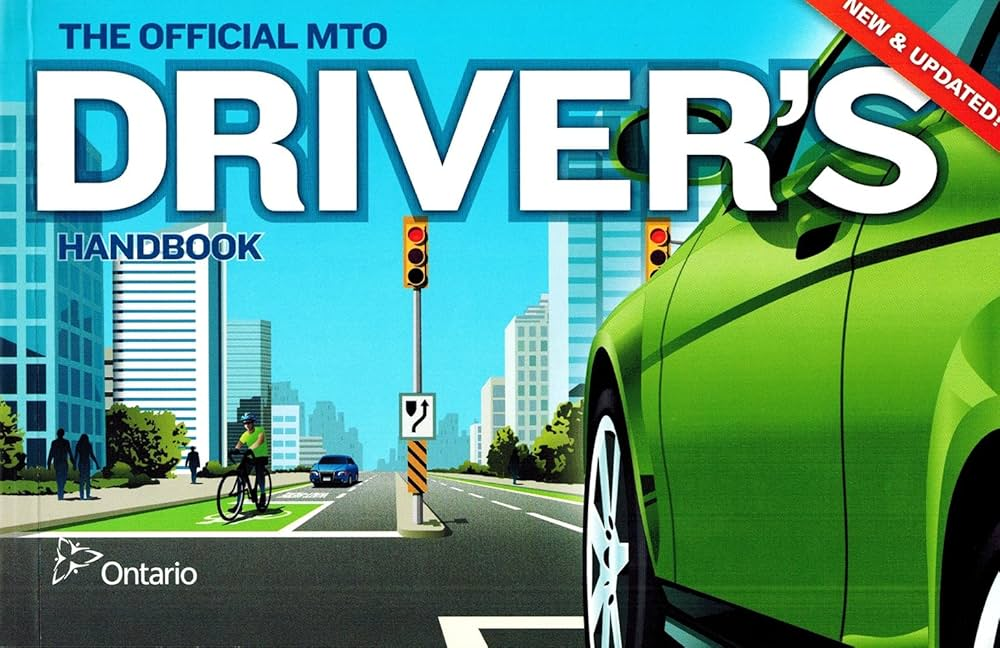
Every question on the test is drawn from the Official MTO Driver’s Handbook, which is available free online at ontario.ca or as a printed copy for $14.95 at DriveTest Centres and select retail stores (MTO, 2025). There is no supplementary source. If the answer is not in that handbook, it will not be on the test.
What You Are Actually Being Tested On
The two sections test genuinely different types of knowledge, and many candidates underestimate one at the expense of the other.
The road signs section covers every category of sign used on Ontario roads, including regulatory signs (stop, yield, speed limits), warning signs (curves, school zones, railway crossings), and information signs. Many signs look similar in shape or colour, and the test exploits that. A red octagon means stop. A red circle with a slash means prohibited. Knowing the visual language precisely is as important as knowing what any individual sign says.
The rules of the road section covers a broader range of topics: right-of-way at intersections, speed limits in different zones, following distances, passing laws, school bus rules, distracted driving legislation, blood alcohol limits for different licence classes, and the specific restrictions that apply to G1 and G2 drivers. This section tests whether you understand how to apply the rules in real scenarios, not just whether you can recall them in the abstract.
How to Study Effectively
The candidates who fail the G1 test almost always did the same thing: they skimmed the handbook once, took a handful of practice questions from an unofficial source, and assumed that was enough.
Read the Official MTO Driver’s Handbook at least twice. The first pass gives you a broad understanding of the content. The second pass, done more slowly, locks in the specific rules and numbers you will need. Pay particular attention to sections covering school zones, railway crossings, alcohol and drug impairment thresholds, and the restrictions specific to G1 and G2 drivers.
Study road signs as a separate task. Most candidates are comfortable with the common signs and underestimate how many variations exist. Go through every sign in the handbook, cover the label, and test yourself. The signs that look similar to each other are the ones most likely to appear on the test.
Use practice tests to identify gaps, not to memorize answers. The value of a practice test is not just in passing it. It is finding the questions you got wrong and going back to the handbook to understand why. If you are memorizing which answer to pick without understanding the rule behind it, you are not actually preparing for the test.
Drivisa’s free G1 practice test is built around this approach. It covers both the road signs and rules sections in a realistic format, giving you a clear picture of where your knowledge is solid and where you need to return to the handbook before test day. You can access it through the Drivisa platform before you visit the DriveTest Centre.
The Day of the Test
The G1 test is not timed in a way that should pressure you. There is no penalty for reading each question slowly and carefully. Candidates who rush through questions, especially on the signs section, make avoidable errors that a second read would have caught.
A few practical points that help on the day. Bring the documents you need — original identity documents as outlined in our DriveTest document checklist, and your payment for the $159.75 package fee (MTO, 2025). If you wear glasses or contacts, bring them, as you will take a vision test. Arrive with enough time that you are not rushed before sitting down.
When you encounter a question, you are unsure about, read it again before guessing. Many G1 test questions hinge on a single word, such as “must,” “should,” “may,” or a specific number. The answer that is technically correct under Ontario law is not always the one that feels intuitively right.
If You Do Not Pass
Failing one section of the G1 test does not mean starting over. You only need to retake the section you did not pass, and the retest fee is $16 (MTO, 2025). Some DriveTest Centres will allow you to rebook on the same day if space is available, though this varies by location and time.
What matters is that you treat a failed section as precise feedback rather than a general failure. If you scored 13 out of 20 on road signs, go back through the signs chapter of the handbook specifically and work through Drivisa’s practice questions again before returning. Targeted review is significantly more efficient than re-reading the entire handbook from scratch.
What the G1 Opens Up
Passing the G1 test is not just a bureaucratic milestone. It is the point at which the clock on your graduated licensing path begins. As we covered in our BDE savings guide, completing your G1 and immediately enrolling in a Drivisa BDE course means you can take your G2 road test after just eight months rather than twelve. That four-month difference has real financial consequences, particularly for insurance, and it all starts with being prepared enough to pass the G1 test on the first try.
Ready to see where you stand before test day? Try Drivisa’s free G1 practice test so you know what to expect when you take your G1 written exam!
Give it a try!
References
Ontario Ministry of Transportation. (2025). Get a G driver’s licence: new drivers. Government of Ontario. https://www.ontario.ca/page/get-g-drivers-licence-new-drivers
Ontario Ministry of Transportation. (2025). Official MTO Driver’s Handbook. Government of Ontario. https://www.ontario.ca/document/official-mto-drivers-handbook
Ontario Ministry of Transportation. (2025). Getting your driver’s licence. Official MTO Driver’s Handbook. https://www.ontario.ca/document/official-mto-drivers-handbook/getting-your-drivers-licence
